The open world of Ghost of Yotei is one of the most carefully crafted game environments ever made — beautiful in a way screenshots only partly capture. Set across the vast island of Ezo (modern-day Hokkaido), the game world stretches from windswept coastal cliffs and frozen shorelines through dense boreal forests and volcanic highlands to the snow-capped summit of Mount Yotei itself. Every square meter of this landscape has been designed with purpose, hiding stories, secrets, and rewards for players who take the time to venture off the beaten path. The exploration system in Ghost of Yotei goes far beyond simply filling out a checklist of map markers — it rewards genuine curiosity, observational skills, and a willingness to engage with the world on its own terms. Whether you're a completionist who wants to discover every hidden location and collectible, or a more casual explorer who simply enjoys soaking in the atmosphere and stumbling upon unexpected discoveries, Ezo has something extraordinary to offer.
The Regions of Ezo: A Tour of the Island
Ezo is divided into several distinct regions, each with its own visual identity, climate, wildlife, enemy types, and cultural influences. The southern coastal region is the most temperate area, featuring fishing villages, rice paddies, and trading posts where Japanese settlers have established a foothold. Moving northward, the landscape transitions into dense cedar and birch forests that cover rolling hills and shelter hidden Ainu communities. The central highlands are dominated by volcanic terrain, with geothermal hot springs, obsidian fields, and the dramatic slopes of Mount Yotei looming over everything. The northern tundra is the harshest region, with howling blizzards, frozen lakes, and scattered ruins of ancient settlements that hint at civilizations that existed long before the events of the game. The eastern coastline features dramatic sea cliffs, hidden coves, and smuggling routes used by pirates and traders. Each region feels genuinely distinct, not just visually but in terms of gameplay — the enemies you face, the resources you find, and the environmental challenges you overcome all change significantly as you move between different areas, ensuring that exploration never feels repetitive or predictable.
Mount Yotei: The Crown of Ezo
Mount Yotei is the defining landmark of the game world, a towering volcanic peak visible from almost every corner of Ezo. Inspired by the real Mount Yotei in Hokkaido (also known as Ezo Fuji for its resemblance to Mount Fuji), this mountain serves as both a navigational anchor and one of the game's most significant exploration challenges. Reaching the summit is not a straightforward climb — the mountain features multiple paths, each revealing different aspects of the game's world-building and environmental storytelling. Along the way, you'll discover hidden shrines, encounter rare wildlife, find valuable resources, and uncover lore fragments that deepen your understanding of the game's mythology. The climb is divided into several elevation zones, each with progressively harsher weather conditions and more dangerous enemies. Near the summit, visibility drops dramatically, and the wind becomes a genuine gameplay mechanic that affects your movement and combat effectiveness. But the reward for reaching the peak is extraordinary — a panoramic view of the entire island of Ezo spread out below you, coupled with a story moment that recontextualizes the game's central conflict and provides one of the most memorable experiences in the entire game.
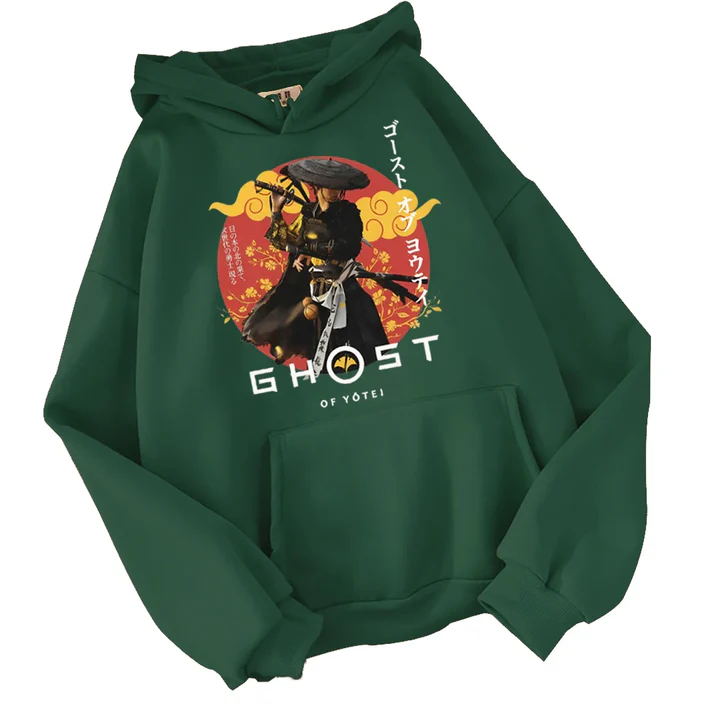
Reaching that summit view makes you want a souvenir. We can't ship you the mountain, but our Ghost of Yotei green zipper hoodie comes close — full-zip front, subtle game-inspired design, easy to layer on cold mornings. It's $44 and ships anywhere for a flat $10.
Hidden Locations and Secret Areas
Ghost of Yotei is packed with hidden locations that reward observant explorers with unique experiences and valuable loot. The game uses a subtle environmental guidance system — rather than marking every point of interest on your map with a glowing icon, it provides natural visual cues like unusual rock formations, animal trails, smoke rising from distant locations, and the directions NPCs point toward during conversations. Some of the most rewarding hidden areas include abandoned Ainu ceremonial sites deep in the forest, where you can discover ancient artifacts and learn about the island's pre-Japanese history. There are also hidden hot springs scattered throughout the mountainous regions that provide permanent stat boosts when you bathe in them for the first time. Smuggler's caves along the coast contain rare weapons and armor that can't be obtained anywhere else. And scattered across the island are fox dens that lead to optional puzzle shrines, each one unlocking a unique charm or ability when completed. The game also features a system of 'traveled paths' — if you follow certain routes through the wilderness that match the historical trade routes of Ezo, you'll discover waystations and campsites that tell the stories of the travelers who came before you.
Collectibles: What to Look For
The collectible system in Ghost of Yotei is designed to feel meaningful rather than tedious. Unlike many open-world games where collectibles are generic tokens scattered across the map, every type of collectible in Ghost of Yotei serves a purpose and tells a story. Fox shrines return from Ghost of Tsushima, but with a new twist — each completed shrine now unlocks a piece of Ainu folklore that expands the game's mythological background. Bamboo strikes test your reflexes and reward you with technique points for upgrading Atsu's combat abilities. Mongol artifacts are replaced by 'clan artifacts' — historical items belonging to the various factions competing for control of Ezo, each one accompanied by a detailed lore entry explaining its significance. Hot springs provide permanent health increases. Singing crickets offer ambient audio recordings of traditional Ainu music. And perhaps most importantly, 'memory fragments' — glowing collectibles scattered across the island that, when assembled, reveal Atsu's backstory through beautifully animated cutscenes that fill in the gaps in her history. Completing collectible sets also unlocks cosmetic rewards for Atsu's appearance and horse saddles, giving completionists tangible rewards for their dedication to thorough exploration.
Using Your Wolf for Exploration
The wolf companion is an invaluable tool for exploring Ezo's vast wilderness. In exploration mode, your wolf can scout ahead to reveal points of interest on your map, track animal trails that lead to hunting opportunities and resource gathering spots, and alert you to the presence of hidden enemies or environmental hazards. One of the most useful exploration abilities is the wolf's capacity to sense underground caves and concealed passages that are completely invisible to the naked eye. If you notice your wolf acting restless or running toward a seemingly solid cliff face or hillside, there's almost certainly a hidden cave or tunnel entrance nearby that contains valuable loot or story content. The wolf can also help you navigate during blizzards and fog by following a straight path toward the nearest point of interest, which is invaluable in the game's northern regions where visibility is frequently reduced to near zero. Taking the time to bond with your wolf through feeding and petting interactions improves its exploration abilities over time, making it an increasingly powerful ally as you progress through the game.
Wear the Journey
If the wilderness is what hooked you, the Kawaii Green hoodie leans into the friendlier side of Ezo — forest green, soft brushed lining, relaxed streetwear fit. It's part of our kawaii edition at $44 with flat $10 worldwide shipping. Best enjoyed after a long, uninterrupted exploring session.