The art direction of Ghost of Yotei represents one of the most ambitious and technically accomplished visual achievements in the history of video game design. Building upon the critical acclaim earned by Ghost of Tsushima's stunning recreation of feudal Japan, Sucker Punch Productions has crafted a visual experience in Ghost of Yotei that goes beyond mere technological impressiveness to achieve something genuinely artistic — a game that looks like a living, breathing painting brought to life. Every frame of Ghost of Yotei could be screenshotted and hung on a wall, yet the beauty is never merely decorative. The visual design serves the storytelling, the gameplay, and the emotional experience at every turn, creating a world that is as meaningful as it is magnificent. This deep dive explores the artistic principles, technical innovations, and creative decisions that make Ghost of Yotei one of the most visually stunning games ever created.
The Japanese Aesthetic: Wabi-Sabi in Digital Form
At the philosophical core of Ghost of Yotei's art direction is the Japanese concept of wabi-sabi — the appreciation of beauty in imperfection, impermanence, and the natural cycle of growth and decay. This aesthetic principle manifests throughout the game in countless ways. Weathered wooden structures show the marks of time and exposure to harsh Ezo winters. Forest paths are overgrown and irregular, shaped by the passage of animals and weather rather than human engineering. The snow-covered landscape is never pristine for long — footprints, wind patterns, and falling debris constantly reshape the terrain, creating a world that feels alive with the processes of natural change. This commitment to naturalistic imperfection extends to the character designs as well. Atsu's clothing becomes worn and weathered over the course of the game, her armor accumulates scratches and dents from combat, and the wolf's fur changes subtly based on the environments it travels through. These details are not mere visual flourishes — they communicate the passage of time and the physical toll of the journey in a way that feels authentic and deeply immersive, embodying the wabi-sabi principle that true beauty lies in the evidence of lived experience.
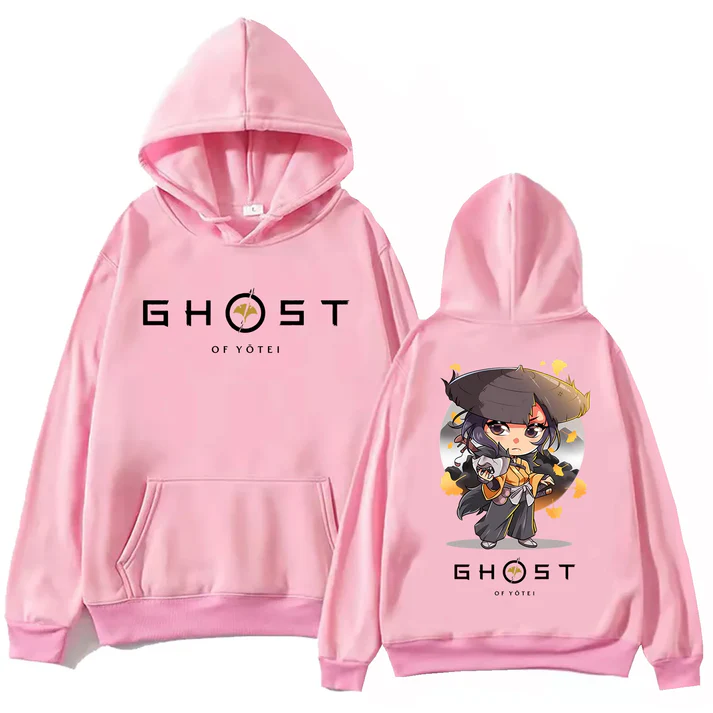
Spring in Ezo — all those cherry blossoms — inspired one of our favorite pieces. The Kawaii Pink hoodie comes in a soft sakura pink with eco-ink artwork, and it might be the most spring-appropriate thing we make. $44, flat $10 worldwide shipping, gentle wash to keep the print sharp.
Environmental Storytelling Through Visual Design
One of the most remarkable aspects of Ghost of Yotei's visual design is how effectively it communicates narrative information without a single word of dialogue or text. Every location in the game tells a story through its visual composition alone. Abandoned settlements show the gradual process of nature reclaiming human structures — broken roofs with trees growing through them, collapsed walls being buried under moss and wildflowers, and personal belongings scattered in ways that suggest the circumstances of their owners' departure. Battlefields display the aftermath of conflict through careful environmental composition — broken weapons embedded in the ground, scorched earth patterns, and the arrangement of fallen obstacles that tell the story of how the fighting unfolded. Even the natural landscape serves as narrative: the orientation of rivers, the patterns of forest growth, and the geological formations around Mount Yotei all communicate the island's volcanic history and the forces that have shaped it over millennia. This environmental storytelling approach means that attentive players can piece together entire story arcs simply by exploring the world and observing the visual details that the art team has meticulously placed throughout the environment.
Seasonal Changes and Dynamic Weather Systems
The dynamic weather and seasonal systems in Ghost of Yotei are not just visual enhancements — they are fundamental to the game's artistic identity and its emotional impact on players. The game features a sophisticated weather simulation that creates unique conditions in different regions of the map simultaneously. While the coast might experience clear skies and gentle ocean breezes, the mountain highlands could be engulfed in a blizzard, and the central forests could be shrouded in dense fog. These weather conditions aren't random — they follow realistic patterns influenced by the terrain, time of day, and the game's internal seasonal cycle. The seasonal progression system is particularly impressive, as the game world gradually transforms as you progress through the story. Spring brings cherry blossoms and fresh green growth. Summer creates lush, dense forests with dappled sunlight filtering through the canopy. Autumn transforms the landscape with brilliant reds, oranges, and golds as the deciduous forests prepare for winter. Winter blankets everything in snow and ice, creating a stark, monochromatic beauty that is both hauntingly beautiful and practically challenging. Each season affects not just the visuals but the gameplay — available resources change, animal behavior shifts, enemy patrol patterns adapt, and certain paths become accessible or impassable depending on the weather conditions.
Lighting: The Unsung Hero of Ghost of Yotei's Visuals
The lighting system in Ghost of Yotei deserves special attention because it is arguably the single most important technical contributor to the game's visual quality. Using a combination of hardware-accelerated ray tracing, precomputed global illumination, and dynamic local lighting, the game creates lighting conditions that are remarkably close to photorealistic in many scenarios. The way sunlight filters through forest canopies, creating god rays that shift and shimmer as branches sway in the wind, is genuinely breathtaking. Interior lighting in buildings and caves uses physically accurate light falloff and color temperature that creates convincing, atmospheric spaces. The golden hour lighting — that magical period just after sunrise and just before sunset — transforms the entire world into something extraordinary, bathing Ezo's landscapes in warm, amber light that creates long shadows and highlights every texture and surface detail. Night scenes use moonlight and firelight sources with exceptional care, creating moody, atmospheric environments that feel genuinely dangerous and mysterious. The lighting system also responds dynamically to weather conditions, with clouds creating moving shadows that sweep across the landscape and fog scattering light in ways that look incredibly realistic.
The Creative Process: How Sucker Punch Built Ezo
Creating the visual world of Ghost of Yotei was a years-long process that involved extensive real-world research, artistic iteration, and technical innovation. The art team at Sucker Punch made multiple research trips to Hokkaido to study the real-world landscapes, architecture, vegetation, and cultural elements that would inform the game's visual design. These trips provided reference photography, sketches, and firsthand experiences that gave the team an authentic foundation for their digital recreation. Back at the studio, the team worked through hundreds of concept art iterations for every region, structure, and environmental element in the game, gradually refining the visual language until it achieved the perfect balance between realism and artistic expression. The technical art team developed custom tools and pipelines specifically for Ghost of Yotei's unique visual requirements, including the advanced snow simulation system, the dynamic vegetation system, and the sophisticated weather rendering pipeline. The result is a game world that feels both authentic and fantastical — grounded in real geography and cultural detail, then lifted by artistic vision and technical craft into something that's genuinely hard to forget.
Wear the Aesthetic
There's a reason minimalism and wabi-sabi pair well — both let the details breathe. Our white Ghost of Yotei hoodie follows the same principle: clean white cotton blend, one well-placed print, nothing shouting for attention. $44 with flat $10 worldwide shipping.