Few questions in the gaming community have generated as much heated discussion in 2025 as whether Clair Obscur: Expedition 33 truly qualifies as an independent game. The debate erupted almost immediately after the game's nominations were announced for The Game Awards 2025, when its inclusion in the Best Independent Game category drew scrutiny from commentators, developers, and players alike. The controversy is not merely semantic. It touches on fundamental questions about how the games industry categorizes and values different types of development, what the term independent actually means in a landscape that has changed dramatically over the past two decades, and whether the awards and recognition systems that govern the industry are adequately equipped to handle the increasingly blurred lines between indie, AA, and AAA development. This article looks at the evidence from all sides and tries to pin down where Expedition 33 actually falls on the spectrum of game development.
The Core Sandfall Team: Size and Background
Sandfall Interactive, the studio behind Expedition 33, was founded by Guillaume Broche and a small group of developers who had previously worked at major French game studios, most notably Ubisoft. The core development team consists of approximately thirty to forty people, which is a number that falls comfortably within the range typically associated with independent studios. This core team was responsible for the game's design, programming, art direction, narrative, and overall creative direction. The team's background at Ubisoft is relevant to the debate because it means they brought AAA-level experience and expertise to a project with a significantly smaller scope and budget. This combination of AAA talent working at an indie scale is partly responsible for the game's remarkable production values, which many observers have noted look and feel like those of a much larger production. The core team's size and the founders' career histories are often cited as evidence that Expedition 33 is not a traditional indie production, since it benefits from institutional knowledge and professional networks that most independent studios lack.
The Credits Tell a Different Story: Outsourcing and Scale
While the core Sandfall team is relatively small, the game's end credits reveal a much larger ecosystem of contributors. When you scroll through the credits of Expedition 33, the number of names listed stretches into the hundreds, encompassing quality assurance testers, localization specialists, motion capture performers, voice actors, orchestral musicians, external art contractors, and technical consultants from around the world. This level of outsourcing is standard practice in the games industry and is not unique to any particular tier of development. However, it complicates the narrative of Expedition 33 as a small indie passion project, because the actual human effort that went into creating the game extends far beyond the thirty to forty people who make up Sandfall's core staff. A Rock Paper Shotgun investigation published in early 2025 examined the game's credits in detail and concluded that while the core creative team was indeed small, the total number of people who contributed to the game's development was comparable to many AA or even lower-end AAA productions. This investigation became a central piece of evidence in the debate, with critics arguing that the outsourcing model allowed Sandfall to achieve production values that a truly independent team of thirty to forty people could not have reached on their own.
Kepler Interactive: A Different Kind of Publisher
Expedition 33 is published by Kepler Interactive, a publishing collective that is structured differently from traditional game publishers. Kepler is owned by a consortium of development studios rather than by a parent corporation or investment fund, which means that the developers themselves have a stake in the publisher's success and a voice in its decision-making. This cooperative structure is one of the reasons Sandfall and other Kepler-published studios describe themselves as independent, since they maintain creative autonomy and ownership of their intellectual property. However, Kepler provides resources and support that go well beyond what most indie developers have access to, including funding, marketing, distribution, and quality assurance infrastructure. The question of whether Kepler's involvement disqualifies Expedition 33 from indie status is one of the most contentious aspects of the debate. Supporters argue that Kepler's cooperative structure means it is fundamentally different from traditional publishers like Electronic Arts or Sony Interactive Entertainment, and that studios published by Kepler retain the creative independence that defines indie development. Critics counter that regardless of Kepler's ownership structure, the resources and infrastructure it provides give its partner studios advantages that most indie developers can only dream of, placing Kepler-published games in a category that is neither traditionally indie nor traditionally AAA.
The Evolving Definition of Indie in Modern Gaming
The debate over Expedition 33's indie status highlights a broader problem in the games industry: the term indie no longer has a clear or universally agreed-upon definition. In the early days of independent gaming, the label was relatively straightforward. An indie game was a game developed by a small team without external publisher funding, typically with a small budget and limited distribution. Over the past two decades, this definition has become increasingly inadequate as the industry has evolved. Today, the term indie is used to describe everything from solo developer passion projects made in bedrooms to mid-budget productions from studios of fifty or more people with publisher backing and global distribution. Games like Hollow Knight: Silksong, developed by Team Cherry, have faced similar questions about their indie credentials despite being made by a very small team. Conversely, games like Hades from Supergiant Games, a studio of about twenty people, are universally accepted as indie despite having production values that rival many AA releases. The lack of a clear definition means that the indie label is applied inconsistently and often politically, with different stakeholders using the term to serve different agendas.
The AA Resurgence: A Category That Might Fit Better
Many commentators have suggested that the concept of AA games provides a more accurate framework for understanding where Expedition 33 sits in the industry landscape. AA, or double-A, refers to games that occupy the middle ground between indie and AAA: they have larger budgets and teams than typical indie productions but smaller scale than the blockbuster AAA titles from major publishers. The AA category was more prominent in previous console generations but declined as the gap between indie and AAA widened dramatically. Recently, however, there has been a resurgence of interest in the AA space, driven partly by the success of games like Expedition 33 that demonstrate there is a substantial audience for mid-budget titles with focused creative vision. GamesIndustry.biz published an interview with representatives from Sandfall Interactive and Kepler Interactive in which they discussed the game's positioning in the market, and while they continued to describe the game as independent, they acknowledged that the traditional categories were increasingly inadequate for describing the reality of modern game development. The AA label, while imperfect, at least captures the game's position as a mid-budget production that punches well above its weight class without attempting to compete directly with the biggest AAA releases on their own terms.
Why the Debate Matters for the Industry
The debate over Expedition 33's indie status is not merely a semantic exercise or a matter of award categorization. It has genuine implications for how the games industry understands itself and how resources are distributed. If a game with Sandfall's level of outsourcing and publisher support can compete in indie categories and win indie awards, it potentially raises the bar for what constitutes an indie production in ways that could disadvantage smaller, more traditional independent developers who lack access to similar resources. On the other hand, restricting the indie label to only the smallest and most modest productions could create a ghetto that prevents mid-budget games from receiving the recognition and audience they deserve. The debate also reflects broader tensions in the industry about the concentration of resources and the diminishing opportunities for truly independent voices. As development costs continue to rise and the gap between indie and AAA grows ever wider, the question of where to draw the line between these categories will only become more pressing. Expedition 33 has become the flashpoint for this conversation not because it is the only game that blurs these boundaries but because its exceptional quality and historic awards success have brought the underlying structural issues into sharp relief.
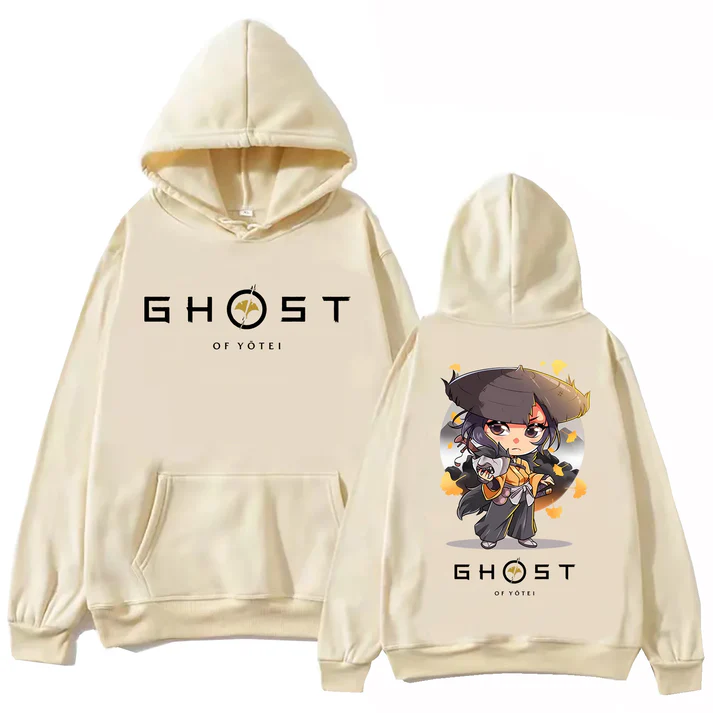
Whatever label you settle on for Sandfall -- indie, AA, something in between -- the game exists because a small team bet on itself. That's roughly the Huzi Style story too, minus the award sweep. The Beige pullover from our Ghost of Yotei anime line is breathable, unisex, and $44 USD with flat $10 worldwide shipping: a small nod to independent studios of every size, ours included.