Great video game villains are rare. For every memorable antagonist that players discuss for years after completing a game, there are dozens of one-dimensional evildoers whose motivations amount to little more than a desire for power, destruction, or world domination. Renoir, the primary antagonist of Clair Obscur: Expedition 33, belongs firmly in the former category. He is a villain of extraordinary complexity, a character whose actions are reprehensible by any reasonable moral standard but whose reasoning is so internally consistent and philosophically grounded that players find themselves understanding, and in some cases even sympathizing with, the perspective that drives him to oppose the expedition at every turn. This analysis examines Renoir's role in the narrative, his motivations, his relationship to the painted world, and why he deserves to be mentioned alongside the greatest antagonists in the history of the RPG genre.
Who Is Renoir? Enforcer of the Paintress
Renoir serves as the Paintress's primary enforcer within the painted world, a powerful and relentless warrior who has been tasked with ensuring that the Gommage proceeds according to the Paintress's design and that no expedition ever reaches her to interfere with her work. He is not a natural inhabitant of the painted world in the way that most characters are. Instead, he was recreated or painted into existence specifically to serve as the Paintress's defender, granting him a unique ontological status that complicates his relationship to both the painted world and its inhabitants. His existence is fundamentally tied to the Paintress's will, yet over time he has developed his own understanding of the world and his own reasons for carrying out his duties. This tension between his origins as a created servant and his evolution into a being with independent thought and motivation is one of the most fascinating aspects of his character. The game never explicitly states whether Renoir's growing complexity is an intended feature of his design or an emergent property of existing within a painted world that has developed far beyond its creator's original intentions, leaving players to draw their own conclusions about the nature of his autonomy.
The Philosophy Behind His Actions: Protection of Natural Order
What makes Renoir compelling as a villain is not the scale of his actions but the logic that underpins them. Renoir genuinely believes that the Gommage is a necessary mechanism for maintaining the stability of the painted world. In his view, the painted world is not infinitely capable of sustaining itself. It has limits, boundaries, and resource constraints that require active management to prevent catastrophic collapse. The Gommage, terrible as it is, serves as a form of population control that prevents the painted world from exceeding its capacity and destroying itself through overpopulation. Resource depletion and the accumulated instability that comes from supporting too many sentient beings within a finite artistic creation are additional threats. Renoir has witnessed the consequences of what he believes would happen without the Gommage: a slow, grinding collapse that would erase everyone rather than a select few, a death of the entire world rather than the surgical removal of specific age groups. From his perspective, he is not a murderer. He is a steward, making the impossible choice between partial and total destruction. The game provides enough evidence to suggest that his fears about the painted world's fragility may be at least partially grounded in truth, which prevents his philosophy from being easily dismissed as villainous rationalization.
Multi-Phase Boss Fights: Among the Most Challenging
Renoir's boss encounters are among the most demanding and meticulously designed in Expedition 33, featuring multiple phases that escalate dramatically in both mechanical complexity and narrative intensity. His first phase tests the player's mastery of fundamental combat mechanics: parrying, dodging, managing the Break system, and executing basic damage rotations. The attacks are fast and punishing but telegraphed clearly enough that a patient player can learn the patterns within a handful of attempts. The second phase introduces environmental hazards, shifting arena layouts, and new attack combinations that require the player to adapt their positioning and resource management on the fly. Renoir begins using abilities that target multiple party members simultaneously, forcing players to make rapid decisions about which threats to address and which to endure. The final phase strips away most of the breathing room between attacks, creating a relentless assault that tests every aspect of the player's skill simultaneously. Successful parries must be chained back-to-back with almost no margin for error, healing windows are brief and unforgiving, and the Break gauge must be managed with precision to create the openings needed for burst damage. Defeating Renoir requires not just mechanical skill but emotional composure, the ability to maintain focus and execute under pressure when the stakes are at their absolute highest.
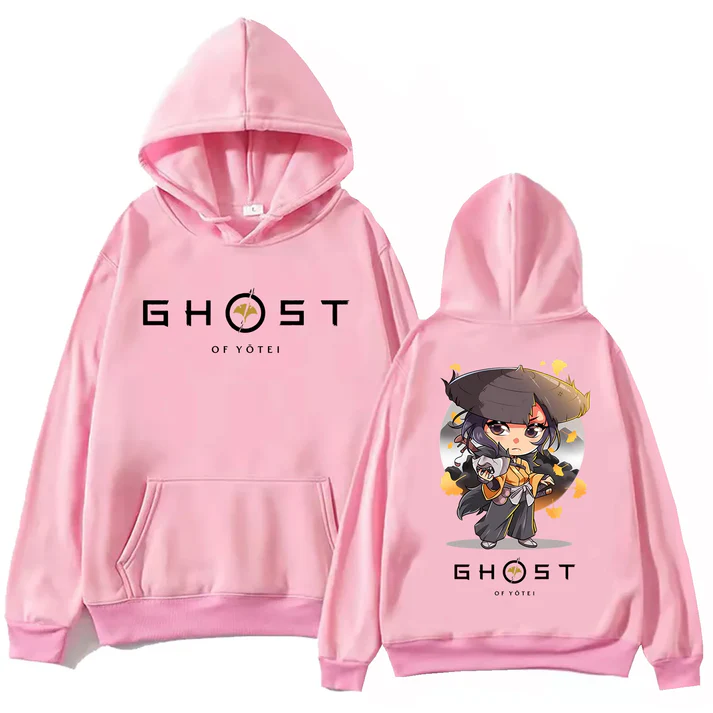
Beating a fight like Renoir takes focus, patience, and a lot of late nights with a controller in hand, and comfort matters more than most players admit. We cannot fix your parry timing, but the Ghost of Yotei Atsu Sakai Clan Black Hoodie — deep shadow black with an embroidered crest — is the kind of hoodie you want for long practice sessions.

Renoir vs the Player: A Villain Who Respects His Opponent
One of the most distinctive aspects of Renoir's characterization is the grudging respect he develops for the player's party as the expedition progresses. Unlike many video game villains who dismiss the protagonist as an annoyance or an insect to be crushed, Renoir recognizes the courage and determination required to mount an expedition against the Paintress. His dialogue during boss encounters and story sequences reveals a complex emotional attitude toward the party that blends genuine admiration for their resolve with a sorrowful conviction that their quest will ultimately fail. He does not hate the expedition members. In many ways, he pities them, because he believes that even if they were to defeat him, the consequences of stopping the Gommage would be worse than the Gommage itself. This dynamic creates a villain who is simultaneously threatening and sympathetic, an opponent whose defeat the player wants but does not necessarily celebrate. The narrative moments between Renoir and the party members, particularly the quiet exchanges that occur when combat has temporarily ceased, are among the best-written scenes in the game because they allow both sides to articulate their positions without reducing the conflict to a simple good versus evil binary.
How Renoir Compares to Gaming's Greatest Villains
When evaluating Renoir against the pantheon of great RPG villains, several qualities place him among the very best. Like Sephiroth from Final Fantasy VII, he carries an aura of inevitability and power that makes every encounter feel weighted with consequence. Like Kreia from Knights of the Old Republic II, his philosophy cannot be easily dismissed and forces players to question assumptions they may have held about the game's central conflict. Like Loghain from Dragon Age: Origins, he makes decisions that are morally repugnant from an emotional perspective but defensible from a strategic one. What sets Renoir apart from all of these comparisons is the specific nature of his dilemma. He is a created being tasked with maintaining a system of death within a world that is itself a created artifact, which adds layers of meta-narrative complexity that few other villains can match. His existence raises questions about free will, the responsibilities of enforcers, and whether a being created for a specific purpose can ever truly be said to have agency over their actions. These are questions that the game does not answer definitively, and the ambiguity is precisely what makes Renoir such a rich and rewarding character to analyze. He is not the villain players love to hate. He is the villain players hate to understand, and that distinction makes all the difference.
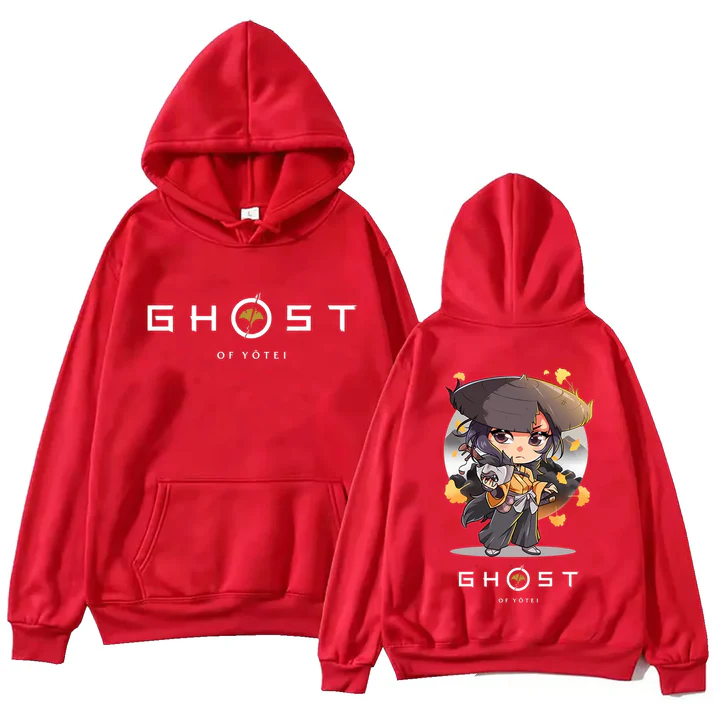
Great villains are defined by conviction, and if Renoir's story stayed with you, you are probably drawn to games that take their fiction seriously. So are we. The Ghost of Yotei Red Hoodie - Atsu & Mount Yotei comes in a deep warrior red that suits a story about conviction, and like everything we sell it is $44 with a flat $10 shipping rate to over 100 countries.